Animals
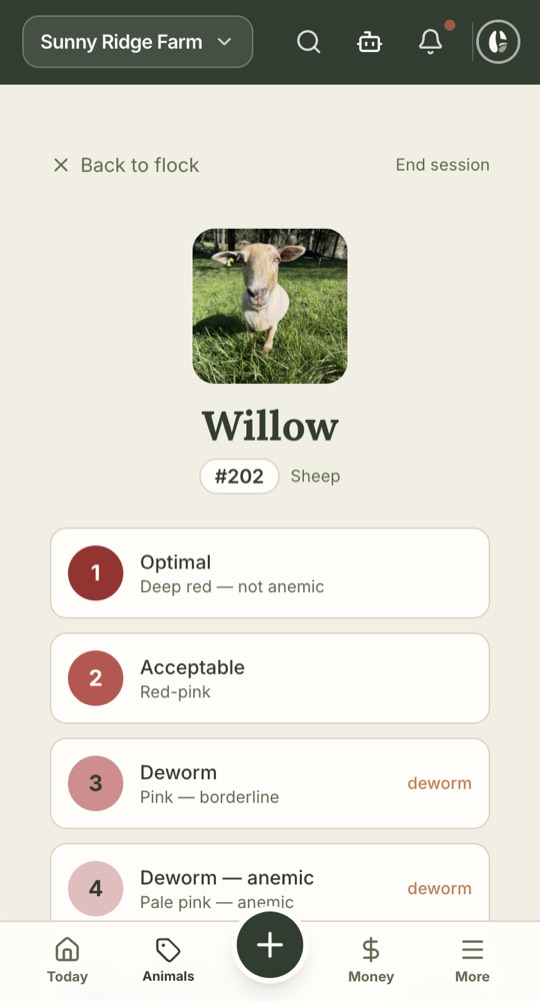
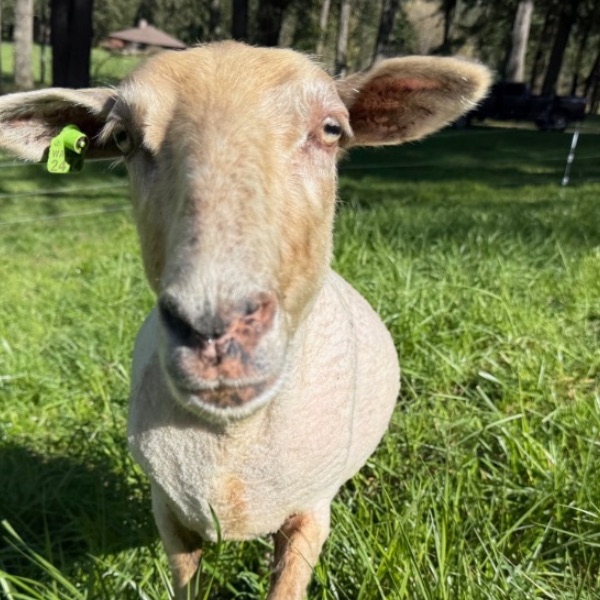
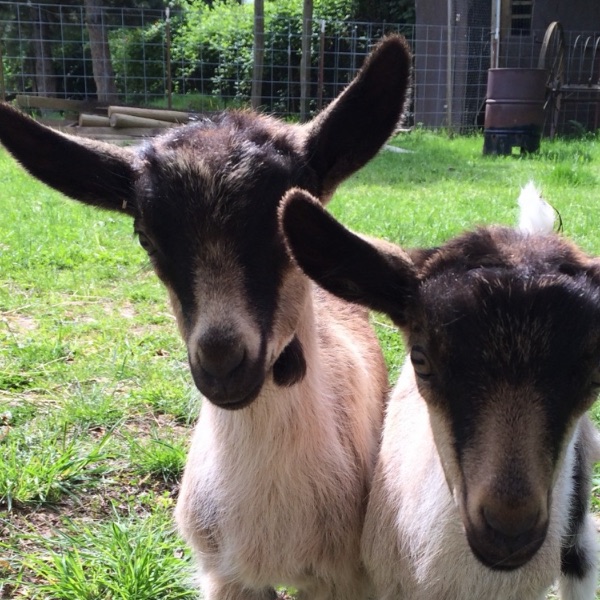
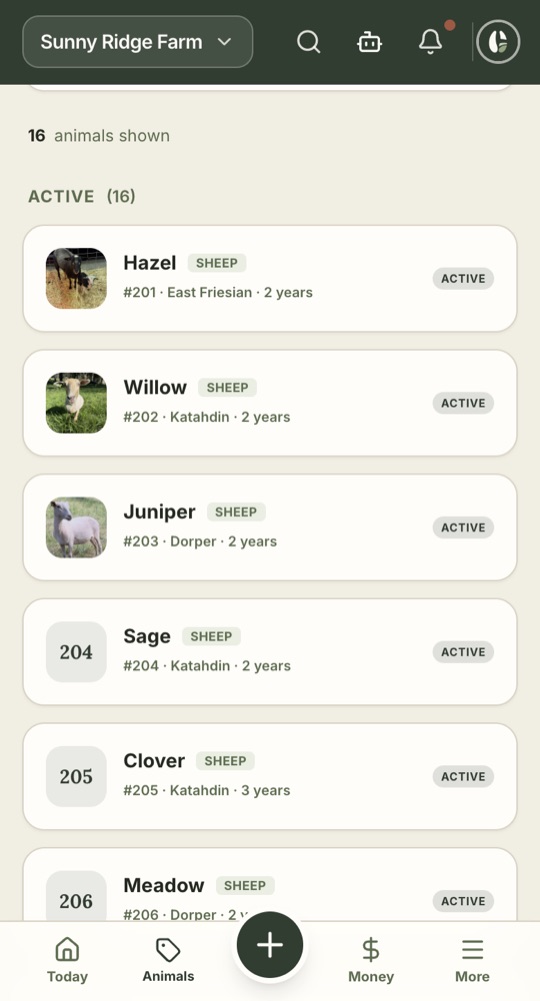
Track tags, photos, health events, weights, breeding, lineage, status, and purpose for sheep and goats.
Know Your Farm. Graze With Confidence.
Track animals, grazing, milk, batches, chores, notes, and farm money in one practical system built for small-ruminant farms.
Looking for sheep and goat farms willing to test, give feedback, and help shape the daily workflow.
One farm record
GrazerOne keeps the daily facts close to the decisions they support, so records become useful instead of becoming one more chore.
Track tags, photos, health events, weights, breeding, lineage, status, and purpose for sheep and goats.
Map paddocks, log moves, monitor rest, and see which pasture is ready next.
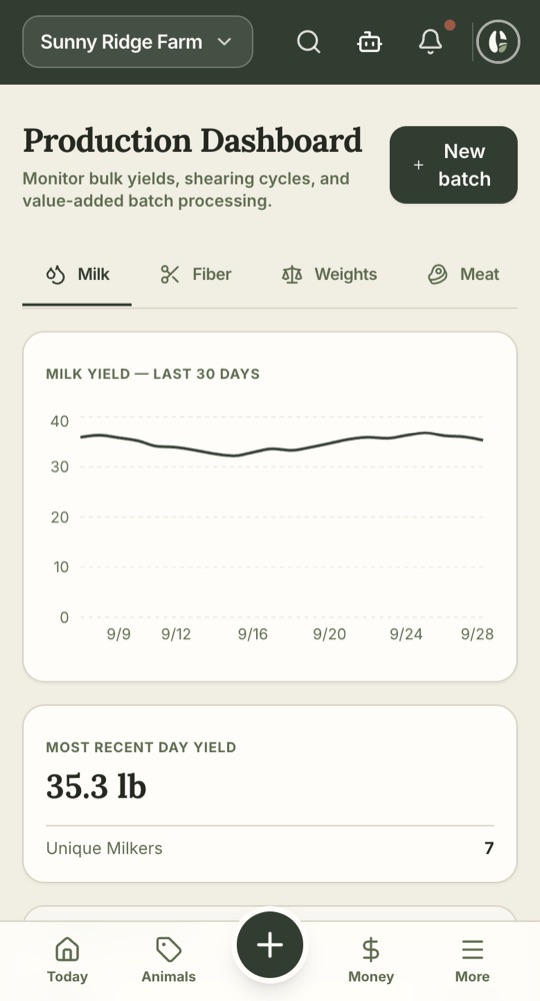
Record milk, fiber, meat weights, and value-added batches without forcing one farm type.
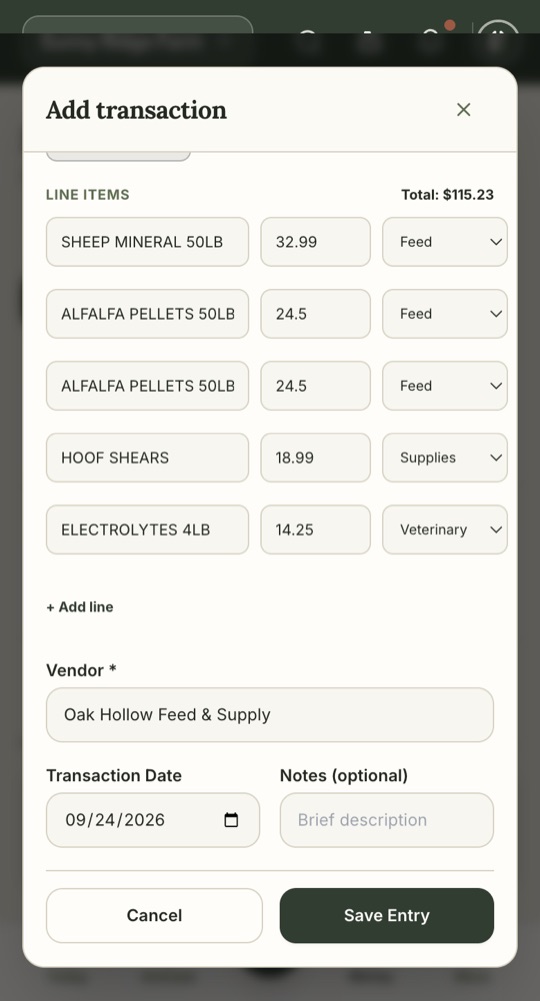
Keep income, expenses, vendors, receipt photos, and exports tied to the farm record.
Surface chores, breeding dates, health follow-ups, weather, notes, and journal context.
Print a bill of sale the buyer can use — tag, scrapie ID, breed, sex, and date of birth already filled in, with signature lines and your disclosure. Your copy adds how long you held the animal and which tax form that points to.
Turn connected records into questions you can answer, from cost per animal to what needs attention today.
How it fits the day
The app is built around the way farm work actually happens: quick notes in the moment, then connected records when you need to look back.
See what needs attention now: moves, milk, health follow-ups, tasks, and weather.
Add milk, weight, treatment, note, receipt, move, or chore from the phone.
Records attach to animals, paddocks, batches, vendors, and dates automatically.
Answer real questions about health, breeding, production, profitability, and rotation.
Draw the paddock boundaries you actually use and see them in relation to the ground.
Use Today to see what needs attention and add the move, milk, health, or weight record while it is fresh.
Read days grazed and rest at a glance, then use the longer view to plan the next move with context.
For small-ruminant farms
Milk sessions, lactation context, batches, and cost-per-gallon thinking.
Shearing cycles, fleece weights, notes, and animal-level history.
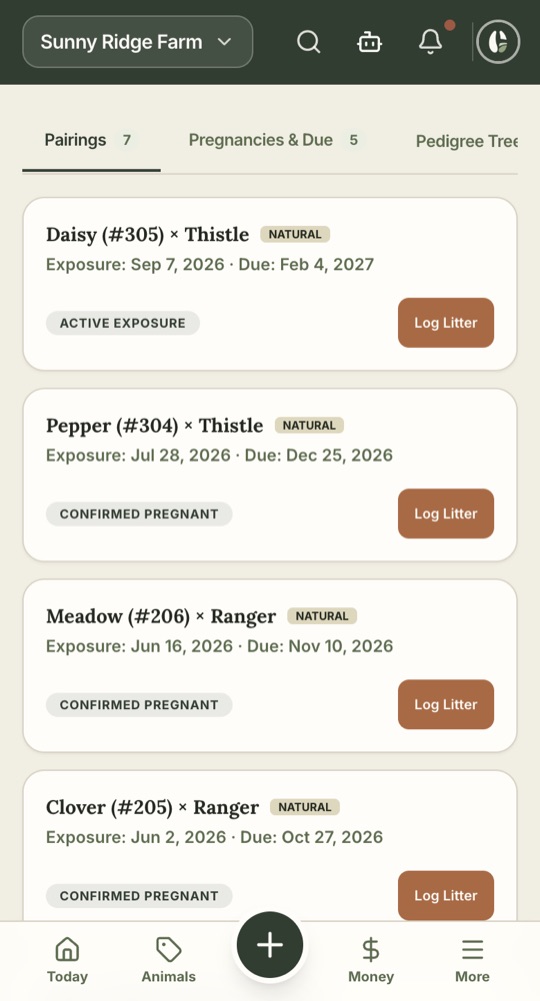
Pedigree, dam and sire links, due dates, lambing and kidding records, and external ancestors.
Weights, health, growth records, market readiness, and sale records.
Multiple purposes per animal, sheep and goat vocabulary, and flexible records.
Signature feature
GrazerOne pairs satellite pasture mapping with the paddock boundaries you draw, move records, rest time, forage readings, herd demand, and parasite pressure. It gives a plain-language recommendation without hiding the reason.
Which paddocks have enough cover for the next move?
Which paddocks have rested long enough to lower reinfection risk?
Connected records
A health note, a receipt, a milk drop, a breeding date, and a grazing move all belong to the same farm story. GrazerOne keeps them findable.
When something needs fixing
A bill of sale, a health record, a milk log — these matter because someone else relies on them: a buyer, a vet, an inspector. If one needs fixing, GrazerOne doesn't erase the old entry and pretend it never happened.
Undo a sale by mistake — wrong buyer, wrong price, fat-fingered on the phone in the barn — and GrazerOne voids the bill of sale and reverses the income entry. Neither one gets deleted, because your buyer may still be holding that paper.
Edit a health record or a milk log and the old value doesn't just vanish — GrazerOne keeps what it looked like before, and who changed it. If a vet or an inspector ever asks "what did this say before," you have an answer, not a guess.
A batch of cheese, soap, or other product can be traced back to the exact milking sessions that went into it — which animal, which day. Correct one of those sessions later, and the batch's record updates with it instead of quietly drifting out of sync.
Why this exists
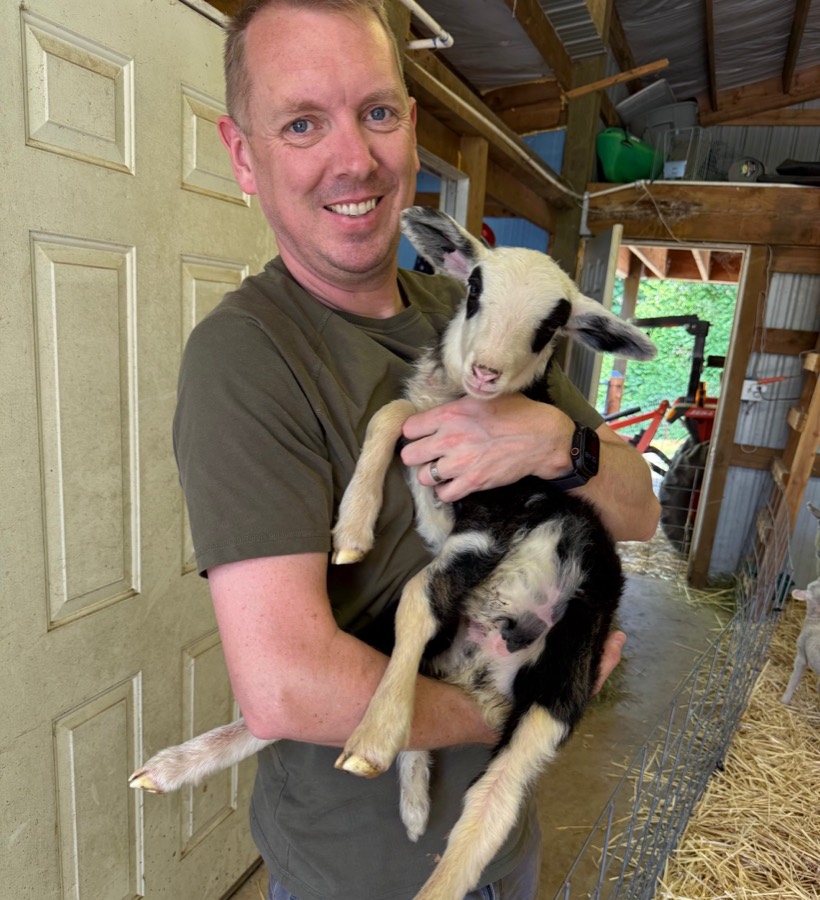
We have kept a small dairy sheep flock in Oregon for nearly two years now — East Friesian and Lacaune crosses, with some Finn and Rideau Arcott in the mix — working toward the size that will support real yogurt and cheese making. We both grew up in 4-H, and between us there have been a lot of livestock over the years, but a milking flock asks different questions than anything we had kept before.
The questions turned out to be relentless and scattered. Which pasture next, and has it rested long enough to be worth the risk. When does that withdrawal clear. Who is due. What did we actually spend this year. Most of it lived in a notebook, a spreadsheet, and memory — and memory was doing more of the work than it should have been.
GrazerOne is the tool we wanted on those days. It is built around a farmer’s morning rather than around a database, because that is the problem we actually had.
Grazer points both directions: the animals that graze, and the grazier who decides where they go next. Both are the subject here. One is the ambition — one place the information lives, one tool to reach for, instead of five that each do part of the job.
The mark is a cloven hoof — sheep or goat, the grazer itself. The other half reads as a leaf or as open pasture, depending on how you look at it. Put together, the whole thing outlines a stencilled G. Most people see that one last, and then cannot unsee it.
The sheep have also turned out to be far better company than we expected. That part did not make it into the feature list.
Planned pricing
These are the intended self-serve plans after early-adopter feedback. Early testers can help make sure the product earns a place in the routine.
For farms that need one dependable place for daily animal, pasture, health, breeding, and task records.
Best for recordkeeping + grazingOr $140 per year.
IncludesFor farms selling milk, meat, fiber, breeding stock, or value-added goods and wanting clearer economics.
Best for production + profitabilityOr $270 per year.
Everything in Graze, plusEarly adopters
If you run sheep or goats and want a practical record system for real farm days, join the early-adopter list. We are looking for people willing to try workflows, share feedback, and tell us what needs to be clearer.